 Monestra
Insight and output
Value history
The app's memory of what a figure used to be — recorded automatically, correctable by hand, and never interpolated.
Monestra remembers what your values were. That memory is what makes the net-worth line on the Dashboard possible, and it is deliberately invisible while it works: it writes points and draws nothing.
How points get recorded#
Three ways, and they have a strict precedence:
| Kind | Where it comes from | Priority |
|---|---|---|
| Manual | You typed it, from a statement | Highest |
| Imported | A CSV you brought in | Middle |
| Observed | The app's own daily reading | Lowest |
There is one point per record per day, and a higher-priority point is never overwritten by a lower one. A figure you typed in from a statement will never be silently replaced by a reading the app took.
Once a day, at launch, Monestra takes an observation of everything that carries a value. This is the only work the app does at launch that writes anything.
Three kinds of series#
Not every module stores history, because not every module needs to:
- Stored — a bare number with nothing behind it, like a bank balance. Monestra keeps the points.
- Derived — a curve that can be evaluated at any date, like a depreciating asset. Nothing is stored; it is computed when asked.
- Module-owned — a dated ledger that already exists, like a goal's contributions. Nothing extra is stored.
Seeing and correcting a record's history#
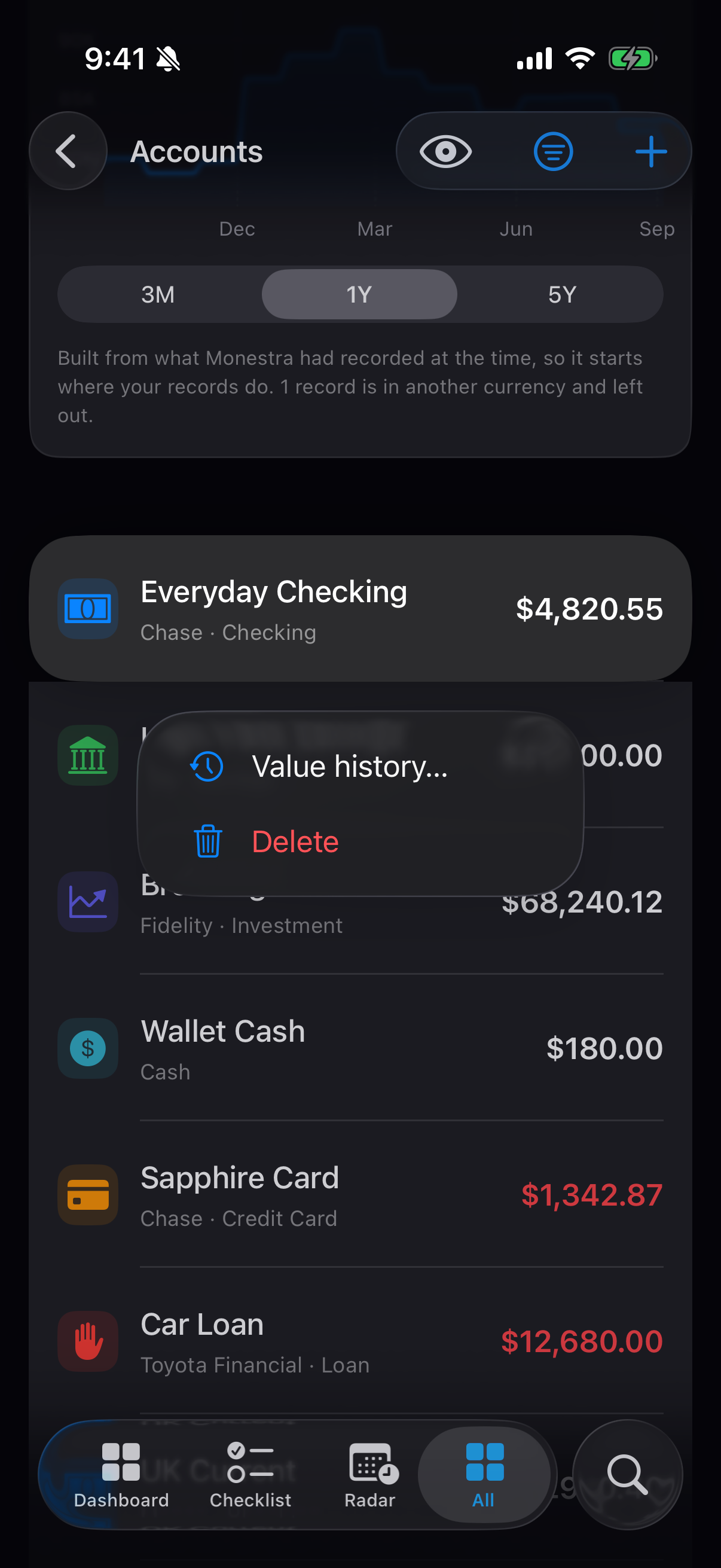
Right-click a row (long-press on iPhone) and choose Value history….

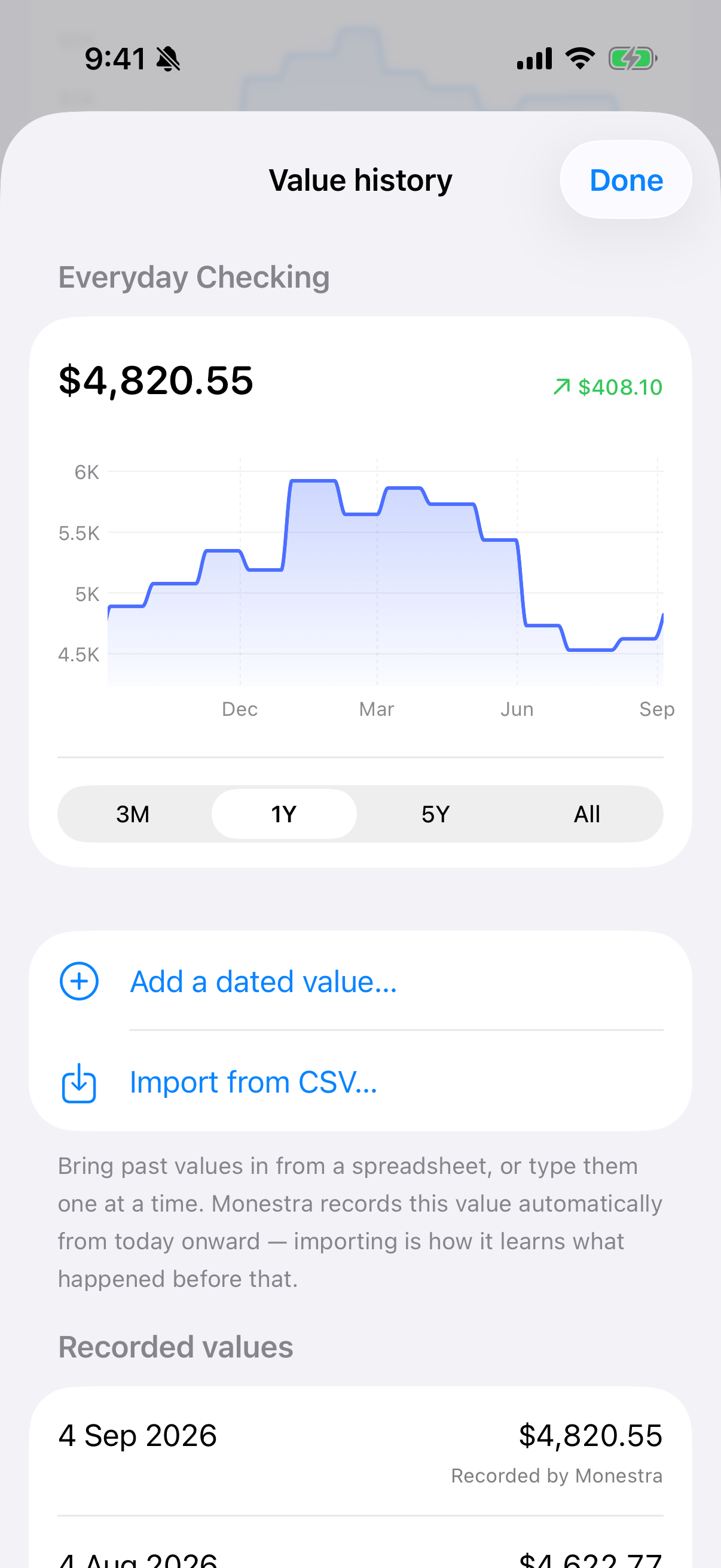
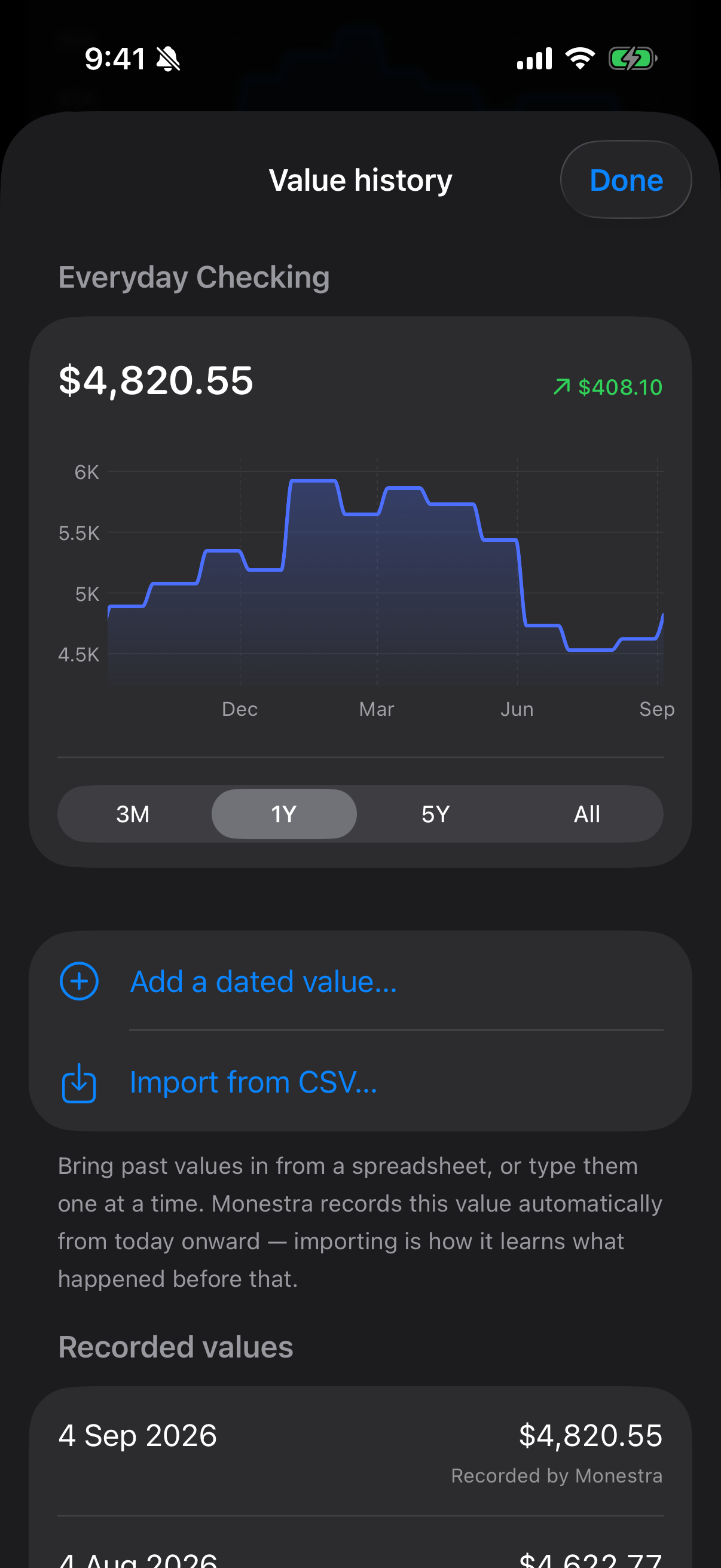
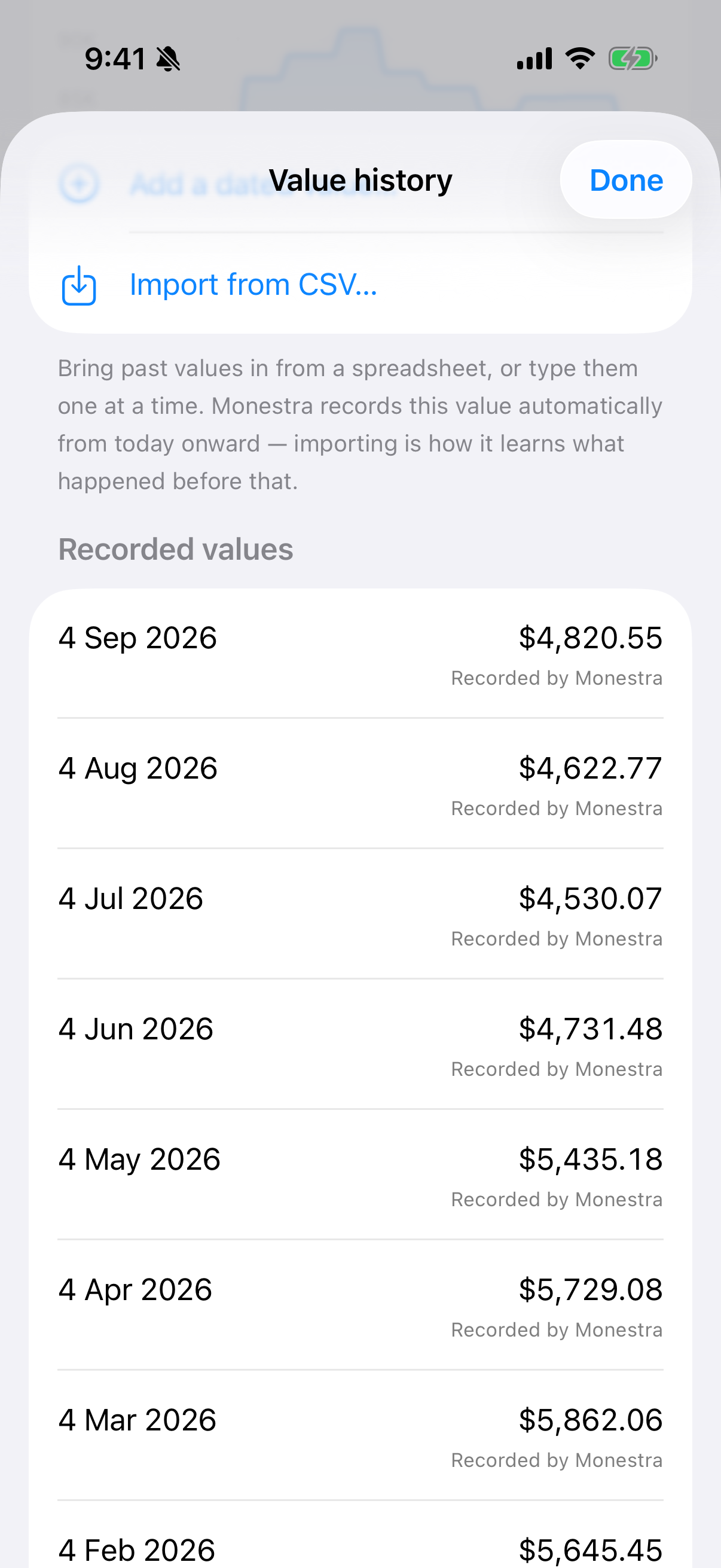
You get the line, and a table of dated values you can edit. Correct a figure here and every total that reads it moves — including the Dashboard's net-worth line, because that line is composed on demand and never stored. This is precisely what lets a correction to the past actually correct the past.
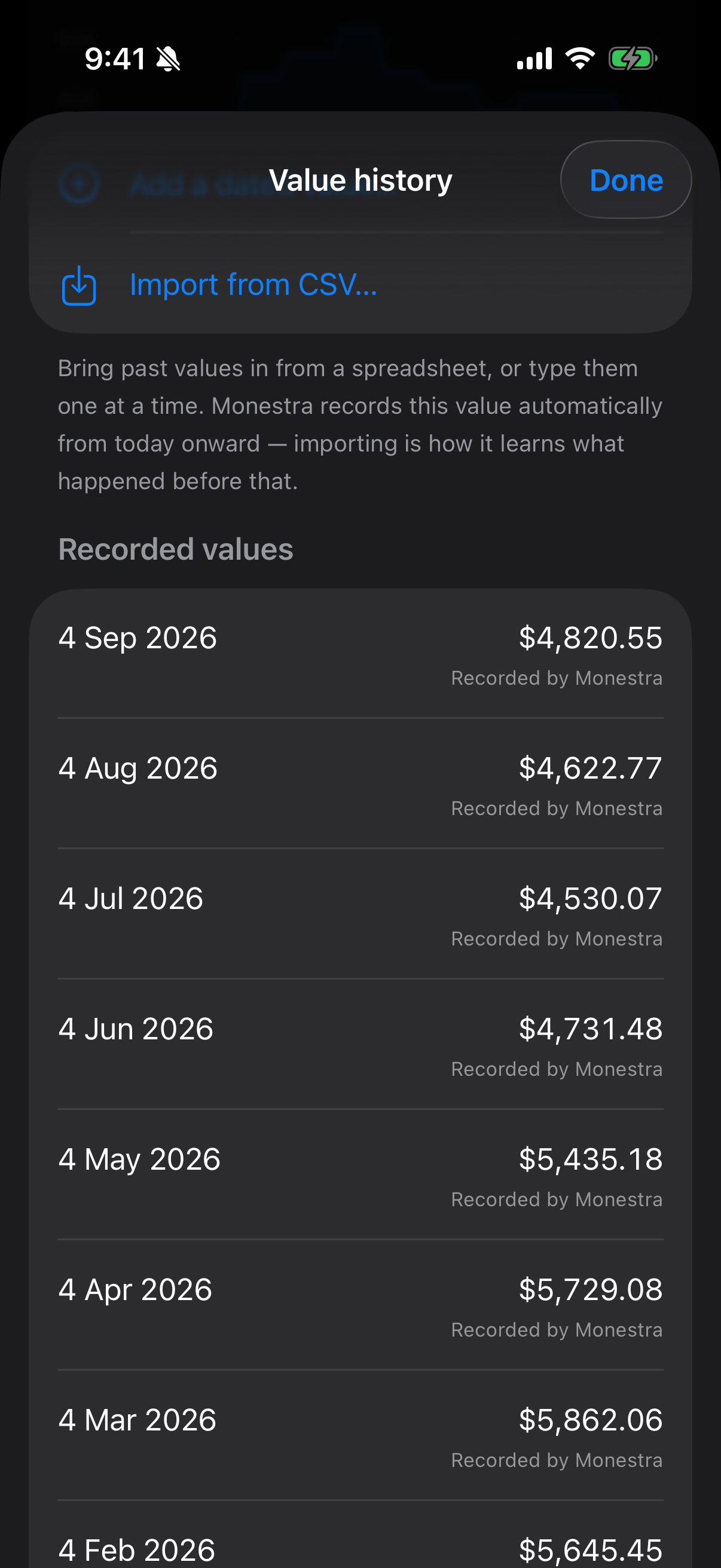
Importing a CSV#
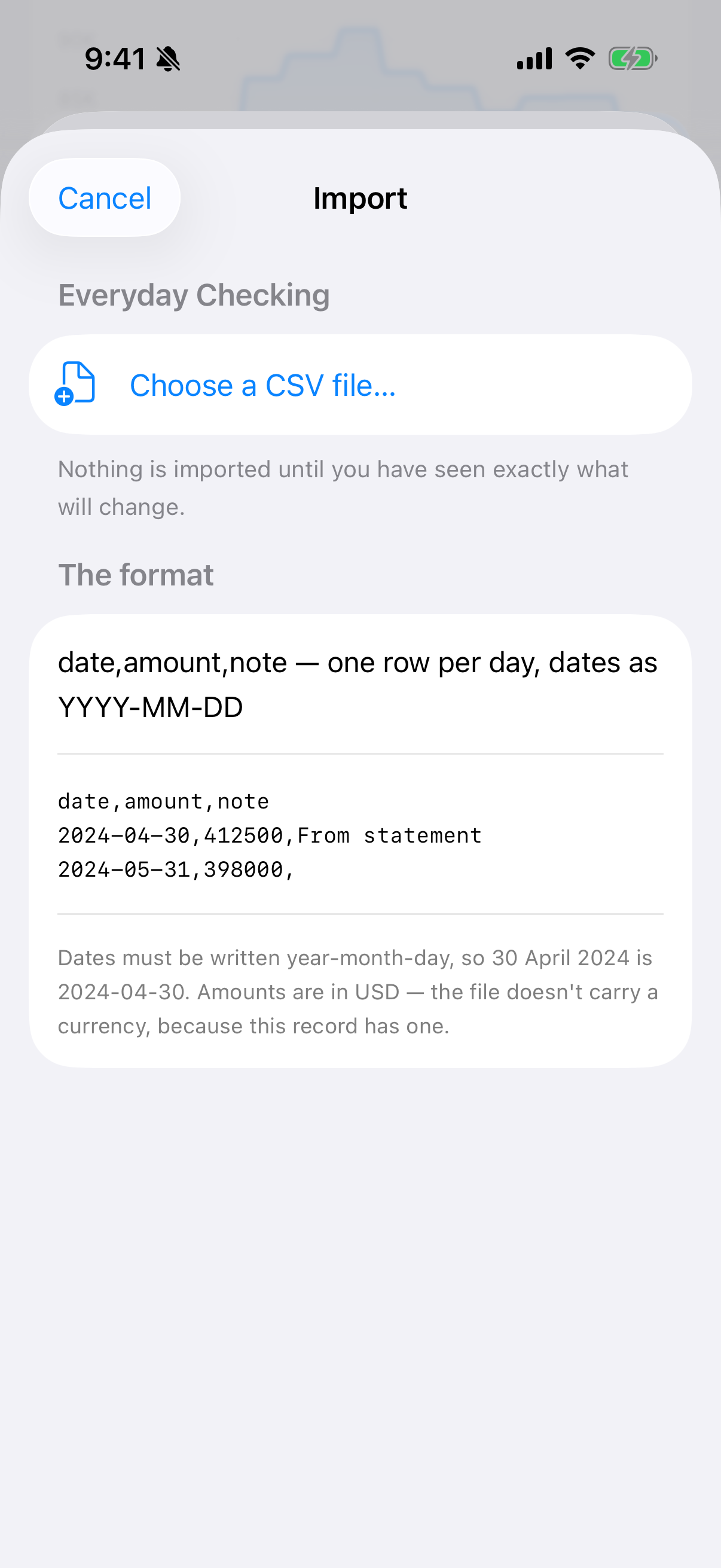
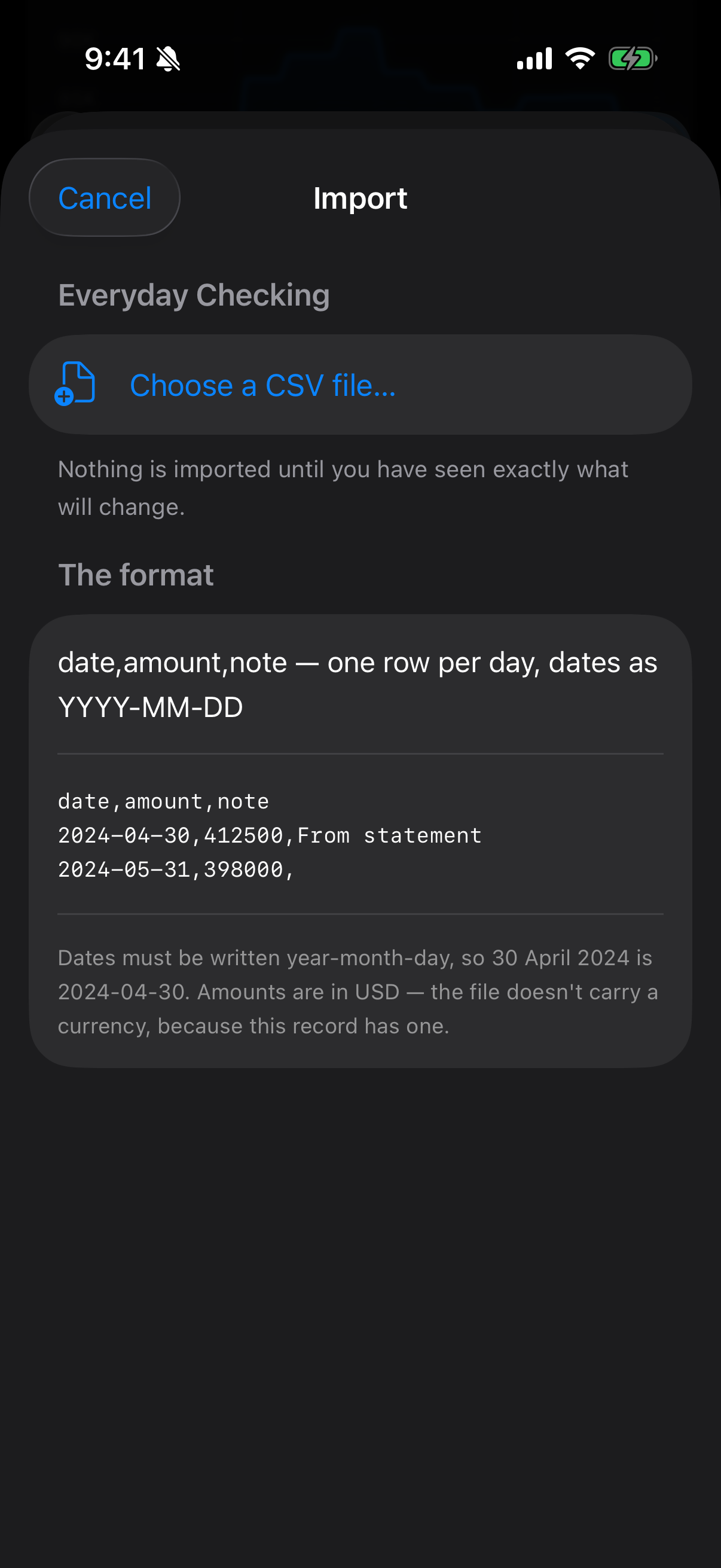
Import shows you a dry-run preview before anything is written. Every row is listed, unreadable ones are named by line number, and the existing value sits next to the incoming one. What gets committed is the plan you reviewed — never the raw file — so nothing lands that the preview did not show.
Reading: carry forward, never interpolate#
When Monestra needs a value for a date with no point, it carries the last known value forward. A balance recorded on 31 March is the estimate for 15 April.
It does not draw a straight line between two points. Interpolating would invent daily movement that never happened — a balance that sat still for a month would appear to have drifted steadily upward, and that fiction would then be indistinguishable from real data.
Before the first point there is no value, not zero. A holding you began tracking in June does not appear as a zero line back to January.
Net worth is never stored#
Net worth is composed from its parts every time it is needed. Nothing anywhere stores a net-worth series.
This is the single decision that makes history correctable. If net worth were stored, fixing a June balance would fix that balance and leave every historical total wrong forever.
Deleting a record#
Deleting a record cascades to its history. If any of the points were hand-entered, Monestra asks first — those are the one kind of data in the app you cannot reconstruct by looking at your accounts.